
Dubai South is gaining momentum as a major residential investment destination, with property transactions in the first eight months of 2026 exceeding the total recorded throughout 2025. Growing demand for off-plan apartments, particularly studios and one-bedroom homes, is contributing to the area’s expanding real estate market.
According to the September 2026 Dubai South Residential Micro-Market Report by Anarock, the area recorded 12,428 residential property transactions between January and August 2026, representing a 27% increase over the 9,788 transactions completed during the whole of 2025. The total value of residential sales reached AED 15.9 billion during the eight-month period.
The figures highlight Dubai South’s growing appeal among property buyers and investors, although future market performance will depend on sustained demand, property supply and the pace of infrastructure development.
Residential Property Sales Continue to Grow
Dubai South’s residential property market has expanded considerably over recent years. According to Anarock’s report, annual residential sales value increased from AED 720 million in 2020 to AED 19.6 billion in 2025. Transaction volumes also rose from 672 in 2020 to 9,788 last year.
By the end of August 2026, residential sales had already reached approximately 81% of the previous year’s total transaction value. This indicates the strength of market activity during the first eight months of the year.
For investors exploring off-plan properties in Dubai, Dubai South is an area worth monitoring because of its development pipeline, expanding residential communities and links to major infrastructure projects. However, individual investment decisions should also consider the developer’s track record, payment plans, handover schedules and the property’s overall value.
Studios and One-Bedroom Apartments Lead Buyer Demand
One of the most notable changes in Dubai South is the growing preference for smaller residential units. Studios accounted for 45% of residential transactions between January and August 2026, compared with 19.5% in 2025.
One-bedroom apartments represented a further 31% of transactions. Together, these property types accounted for approximately 76% of residential sales during the period.
Apartments overall represented 94.5% of residential transaction volumes, reflecting the area’s increasingly apartment-focused market.
This shift suggests that buyers are paying closer attention to purchase budgets and unit affordability. Smaller apartments can offer a lower entry price than larger homes, making them an option for first-time investors and buyers seeking properties with potential rental demand.
Nevertheless, investment returns are not guaranteed. Buyers should assess expected rental income, service charges, maintenance expenses, competition from similar units and the property’s location before committing.
Property Prices Rise as Average Purchase Values Decline
Despite the growing preference for smaller homes, residential prices per square foot in Dubai South have increased. Anarock reported an average residential price of AED 1,656 per square foot during the first eight months of 2026, compared with AED 650 in 2020.
At the same time, the average transaction value declined to AED 1.28 million, down from a peak of AED 2.57 million in 2023.
These trends indicate that lower average purchase values do not necessarily mean property prices are falling across the market. Instead, the increasing share of studios and smaller apartments is influencing the average amount buyers spend on individual properties.
For prospective buyers, comparing prices across different developments, unit sizes and payment structures is therefore essential. A lower-priced apartment may provide a more accessible entry point, but its investment suitability depends on factors such as location, construction quality, future supply and achievable rental income.
Off-Plan Properties Account for the Majority of Transactions
Off-plan properties continue to dominate Dubai South’s residential market. The Anarock report found that off-plan homes represented 94% of residential transaction volumes between January and August 2026, compared with 73% in 2020.
This reflects the importance of new project launches in the area’s development. As more residential communities are introduced, buyers have access to a range of apartment layouts, payment schedules and planned amenities.
For investors considering off-plan property in Dubai South, it is important to examine the developer’s delivery history, project registration, construction progress, contractual handover date and payment obligations. Buyers should also account for the possibility of delays and changes in market conditions before a property is completed.
The secondary market remains relatively small, accounting for less than 6% of residential transaction volumes during the first eight months of 2026. This could change gradually as more projects are completed and handed over.
Rental Demand and Investment Yields
Dubai South’s rental market has expanded alongside its residential sales activity. Anarock reported that average annual rents increased from AED 34,534 in 2020 to AED 82,063 during January–August 2026. Rental transaction volumes also grew to approximately four times their 2020 level.
For 2025, the report recorded an average gross rental yield of 3.9% across residential properties. Apartments registered a gross yield of 4.3%, compared with 3.4% for townhouses and 3% for villas.
These figures are indicative gross yields and do not account for service charges, vacancy periods, maintenance or transaction costs. Actual returns will vary depending on the property, purchase price and rental performance.
Investors should therefore calculate net returns rather than relying solely on headline rental yields. They should also consider the number of competing rental properties expected to enter the market over the coming years.
Al Maktoum International Airport Supports Long-Term Development
Infrastructure development is an important part of Dubai South’s long-term growth story. The expansion of Al Maktoum International Airport is expected to strengthen the area’s role in aviation, logistics, business and residential development.
The airport expansion project, approved in April 2024 with a reported investment of AED 128 billion, is designed to accommodate up to 260 million passengers and 12 million tonnes of cargo annually when fully developed. The report identifies 2032 as the target for the first operational phase, although major infrastructure schedules can change.
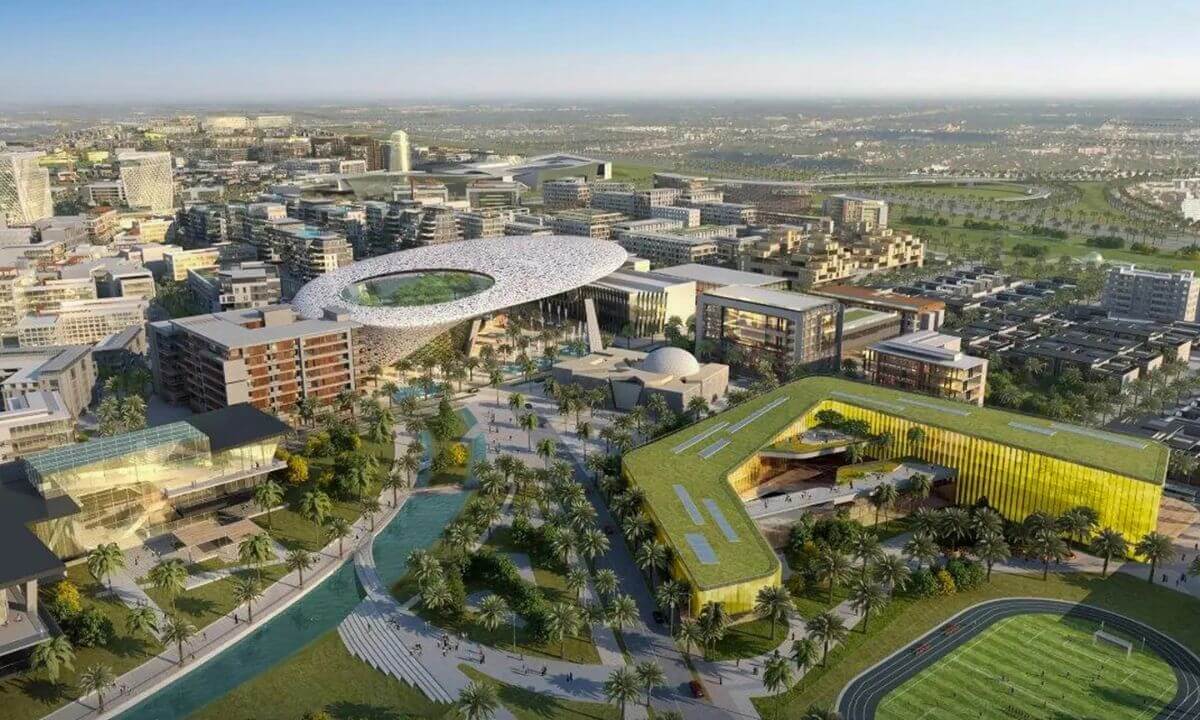
Dubai South spans approximately 145 square kilometres and is planned to accommodate around one million residents and 500,000 jobs when fully developed.
Over time, infrastructure investment and employment growth could support demand for housing in surrounding communities. However, the extent of any benefit to individual properties will depend on accessibility, local amenities, project execution and wider economic conditions.
More Than 38,000 Homes Planned for Delivery by 2029
The next stage of Dubai South’s property market will be shaped by a substantial pipeline of new residential supply.
According to Anarock, 38,116 residential units are scheduled for delivery between 2027 and 2029. This compares with 10,813 homes delivered between 2016 and 2026 to date. Scheduled handovers are expected to peak in 2028, when 16,094 units are due for completion.
Apartments account for approximately 85% of the under-construction residential pipeline, compared with 59% of existing ready stock.
This upcoming supply creates both opportunities and challenges. Buyers could have more options when comparing developments, unit layouts and prices. At the same time, investors may face greater competition when renting out or reselling similar apartments.
The market’s ability to absorb new homes will depend on population growth, employment opportunities, affordability and the timing of actual project handovers. Rental yields could also come under pressure if property values increase faster than rents.
Dubai South Residential Sales Could Reach AED 23.9 Billion in 2026
Based on the sales pace recorded between January and August, Anarock indicated that Dubai South’s residential sales value could reach approximately AED 23.9 billion for the full year if the same pace continues through December.
This figure is a directional projection based on transaction activity, not a guaranteed outcome or formal forecast.
The report expects smaller apartments to remain an important driver of residential demand, while the secondary market may develop as more off-plan homes are completed.
For prospective investors, the latest figures underline the importance of assessing both present market demand and future housing supply. Strong transaction volumes can indicate growing activity, but a sound investment decision also requires careful research into individual developments, pricing, rental prospects and delivery timelines.
Explore Off-Plan Property Opportunities in Dubai South
Dubai South’s residential market is evolving, supported by strong transaction activity, demand for smaller apartments and planned infrastructure investment. With a significant number of homes scheduled for delivery over the next few years, buyers should compare available off-plan developments carefully and assess their long-term suitability.
At OffplanDubaiProperty.ae, we help prospective buyers explore off-plan property opportunities across Dubai and understand key considerations when comparing projects, locations and payment plans.
Explore off-plan properties in Dubai South and make an informed decision based on your budget, investment objectives and preferred handover timeline.
Source: Market figures and research findings in this article are based on Anarock’s Dubai South Residential Micro-Market Report, as reported by Khaleej Times.






 Enquiry
 Call
 Whatsapp